

海外之声 | 德国央行行长:地缘经济碎片化时代的中央银行
导读
当前,世界经济正处在全球化红利减弱与地缘政治冲击加速叠加的调整期。国际货币基金组织将“地缘经济碎片化”界定为由战略考量驱动的经济一体化逆转,疫情冲击、俄乌战争、主要大国贸易摩擦升级以及供应链安全焦虑,共同推动国际经贸秩序从效率优先转向安全优先。世界贸易组织也指出,关税上升、贸易前置、能源价格波动与地区冲突正持续压缩全球贸易和增长前景。在此背景下,各国特别是欧洲地区面临的结构性挑战更加严峻;也正因此,2026年3月1日,德意志联邦银行行长约阿希姆·纳格尔(Joachim Nagel)发表了关于地缘经济碎片化时代央行决策的主旨演讲,旨在增强欧洲经济韧性、推进内部市场整合和加快数字欧元建设。演讲以亚当·斯密《国富论》问世250周年为切入点,深刻剖析了地缘经济碎片化对全球经济秩序的深远冲击,并系统阐述了欧洲增强经济主权与支付独立性的战略路径。纳格尔强调,在地缘政治冲突与贸易政策剧变的时代,欧洲必须在维护国际合作的同时,通过深化内部市场一体化、发行数字欧元等关键举措,构建韧性十足、自主可控的经济体系。
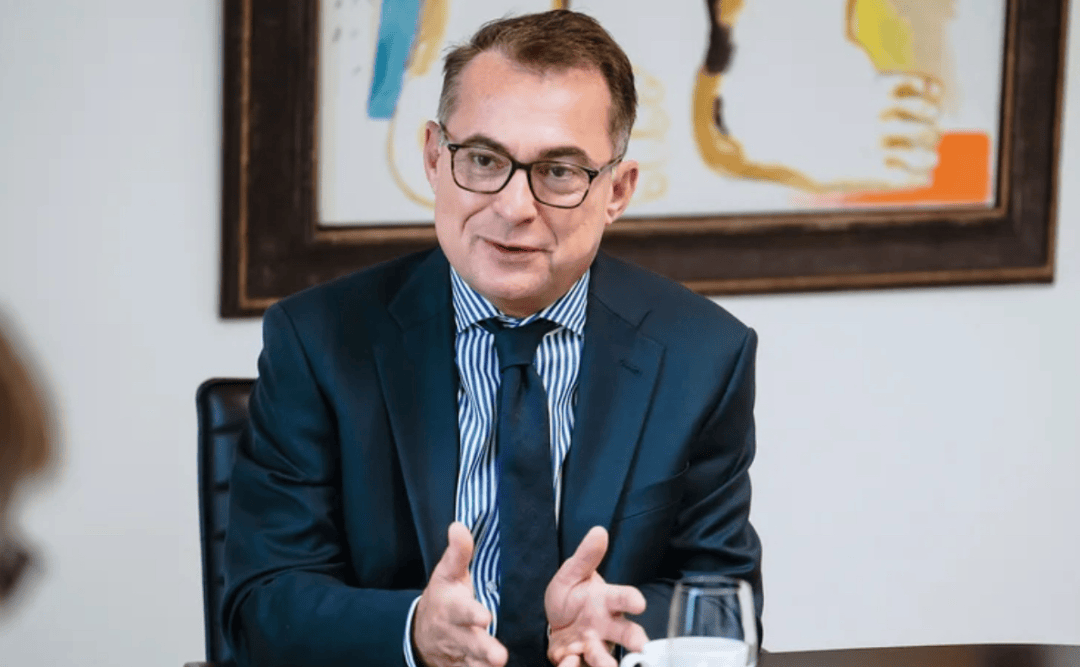
(图源自:Central Banking官网)
纳格尔首先在演讲开篇重温了国际贸易的理论根基。250年前,亚当·斯密以制针厂为例,揭示了分工对生产力的革命性提升。1817年,大卫·李嘉图进一步提出"比较优势"理论,证明即使一国在所有产品上都不具绝对优势,只要专注于相对效率更高的领域并进行贸易,双方仍能获益。这一理论为冷战后全球化浪潮奠定了思想基础,新兴市场深度参与国际分工,发达经济体消费者得以享受更廉价、更多样化的商品。然而,当前世界正经历深刻变革。国际货币基金组织将"地缘经济碎片化"定义为由战略考量驱动的政策导向型去一体化。新冠疫情、中国经济政治化转向及俄乌冲突接连暴露了过度集中供应链的致命风险,"不要把所有鸡蛋放在一个篮子里"的古训重获现实意义。自新一届美国政府上台以来,保护主义措施急剧升温,全球贸易秩序遭遇"构造性转变",国际合作机制严重受损,不确定性飙升至数十年高位。
接下来,纳格尔详细阐述了德国及欧元区的经济前景。德国央行预测,2026年德国经济增长约0.6%,2027年加速至1.3%,主要驱动力来自国防和基础设施的额外政府支出。欧元区经济展现超预期韧性,2026年预计增长1.2%,2027年达1.4%。通胀形势总体有利,符合2%中期目标。但金融稳定风险显著上升:国际金融市场估值偏高、风险溢价偏低,极易受挫折影响;美元避险地位受到质疑,欧元升值对增长和通胀产生复杂影响。
货币政策方面,纳格尔强调灵活应对、保持选项开放。欧洲央行采取灵活、数据驱动的方法,多次会议根据新数据决策,不预先承诺特定路径。当前关键利率水平处于有利位置,同时随时准备调整政策立场。这种开放选项的做法被证明是正确的,特别是在美国关税政策瞬息万变的背景下——当最高法院裁决国别关税非法后,特朗普将全球关税提高10个百分点(美国对德国的有效关税率将下降约4个百分点),但150天后关税是否存续仍是未知数,而灵活的货币政策战略能够应对这种不确定的环境。
欧洲如何应对挑战是演讲的核心议题。纳格尔提出,欧洲必须增强独立性,特别是在国防能力和关键技术领域。以卫星技术为例,目前欧洲尚无匹配星链规模的服务,IRIS²项目计划2030年投入运营;伽利略导航系统虽优于美国GPS,但在国防领域北约仍依赖GPS。经济一体化方面,欧洲央行研究显示,欧洲内部贸易的摩擦成本相当于商品67%、服务95%的关税等值。纳格尔特别强调,储蓄与投资联盟必须成为现实,以更好连接欧洲储蓄与企业投资,让年轻创新型中小企业更易获得融资。
数字欧元成为确保支付主权的关键基础设施。纳格尔指出,目前非欧洲供应商主导欧洲数字支付系统,大型美国公司占据市场核心,欧元区仅余五个国家卡系统,其他地区均依赖Visa或万事达。这种依赖代价高昂——高额商户费用、敏感数据外流,同时可能面临政治压力。数字支付服务是基本必需品而非"锦上添花"。作为现金的数字孪生,数字欧元应可供所有公民免费用于商店、线上或人际电子支付。双支柱模式较为合理:数字欧元作为基础公共产品,私营部门可基于其基础设施提供创新方案。纳格尔期待2026年完成立法程序,使数字欧元在2027年成为现实。
稳定币风险同样受到警示。目前99%的稳定币与美元挂钩,美国监管旨在通过稳定币强化美元主导地位,美元稳定币在欧洲的广泛使用可能危及欧洲支付与金融主权。
演讲结语将当前变革置于历史长河中审视。1776年不仅见证了《国富论》出版,詹姆斯·瓦特的蒸汽机也开启了工业革命。250年后的今天,世界面临对全球化的反弹,也正经历可能比肩蒸汽机影响力的AI革命。纳格尔呼吁汲取历史智慧、把握技术机遇,建设繁荣社会与强大欧洲——既坚持国际合作,又能独立自主立足于世。
英文原文(节选)
Central banking in an age of geoeconomic fragmentation and global uncertainty
Speech by Dr Joachim Nagel
President of the Deutsche Bundesbank,
March 1, 2026.
1 Introduction
Two hundred and fifty years ago this month, the "Inquiry into the Nature and Causes of the Wealth of Nations" was published. In this groundbreaking work, Adam Smith stresses the importance of the division of labour to increase productivity.
He cites the famous example of a pin factory where ten persons, by specialising in different tasks, could produce 48,000 pins a day. Each worker alone could have produced, at the very most, a few pins per day.
Smith advocated the division of labour both between individuals and between nations. The idea that all the countries involved win through specialisation and trade has been exceptionally fruitful.
In 1817, David Ricardo developed his theory of "comparative advantage" as opposed to "absolute advantage".
Absolute advantage means a country can make a good with fewer resources or at lower cost than another country. Comparative advantage means it sacrifices less of other goods when producing that good. Opportunity costs matter, not absolute costs.
Ricardo believed that countries should specialise in the production of goods they can make at lower relative costs – and trade with others.
He gave the example of wine and cloth in England and Portugal: Assume Portugal produces both wine and cloth more efficiently than England. Assume also that Portugal has a greater efficiency advantage in wine production. Then, both countries are better off if Portugal specialises in wine production and England in the production of cloth.
By focusing on individual strengths, they can produce more efficiently. They need not be the most efficient producers of those goods. And even if one country is more efficient at producing everything, trade can still benefit all parties.
Now let's leap forward to the nineteen nineties.
Following the fall of the Berlin Wall and China's accession to the World Trade Organization, far more countries started participating in international trade. In particular, emerging market economies were playing an increasing role in the international division of labour.
This process of strong globalisation has increased global competition and given consumers in advanced economies access to cheaper goods and a greater range of products.
Where do we stand today, in times of geopolitical conflicts? To answer that, we have to talk about geoeconomic fragmentation and uncertainty.
What are the implications of the new global environment? I will focus on those for the economy, inflation, financial stability and monetary policy. Finally, I will discuss how Europe can meet the current challenges and why we need a European central bank digital currency.
2 Geoeconomic fragmentation and global uncertainty
The International Monetary Fund defines geoeconomic fragmentation broadly, namely as a policy-driven reversal of integration that is often guided by strategic considerations.
It generally makes no sense to forego the advantages of an international division of labour. Such policies reduce global prosperity.
However, the COVID-19 pandemic, a stronger political influence on the Chinese economy and Russia's war in Ukraine have shown that it is important to reduce economic dependencies.
The old axiom still holds: Don't put all your eggs in one basket. Diversification reduces risks, which also applies to suppliers. Homeshoring, nearshoring or friendshoring may therefore appear useful when realigning supply chains.
You are probably familiar with such considerations in your business: How can robust supply chains be designed without sacrificing too many efficiency gains?
Since the new US administration took over, the global environment has again changed massively. Geoeconomic considerations as well as protectionist measures are playing an increasingly important role. The global trade order has been shaken by the tectonic US shift in trade policy.
International cooperation is suffering. In connection with this, geoeconomic risks as well as uncertainty are very high.
Given the difficult circumstances around the globe, let me turn to how the Bundesbank sees the economic situation in Germany.
3 Economy, inflation and financial stability
We forecast that the German economy will grow by about 0.6% this year and by an even stronger 1.3% next year (on a calendar-adjusted basis). Unadjusted growth rates will be somewhat higher at 0.9% for 2026 and 1.4% for 2027 due to more working days.
This is good news, even though such growth rates are a far cry from rates observed a decade ago: in 2016 and 2017, GDP grew at 2.2% and 2.7%, respectively.
The recovery is being driven largely by additional government spending on defence and infrastructure. These are estimated to contribute 1.3 percentage points to economic growth by 2028.
Private demand is also likely to pick up momentum slowly. The euro area economy has proven more resilient than expected over the past year – despite the appreciation of the euro.
In December, the Eurosystem staff revised its projections a bit upwards, with the euro area economy forecasted to expand by 1.2% this year and by 1.4% in 2027 (calendar-adjusted).
Inflation developments are favourable. They remain consistent with our medium-term target of 2%. According to the December projections for the euro area, there will be a temporary slight undershooting of the 2% mark this year and next.
For 2028, the Eurosystem staff expects a point landing at 2%. This outlook is, of course, also highly uncertain.
As if this trite saying needed confirmation, ten days ago the US Supreme Court struck down most of the tariffs imposed by the President. In addition, trade policy conflicts and persistent geopolitical tensions have increased the risks to financial stability.
In Germany, structural challenges are weighing on the economy, too, and could impair financial stability. Risks from German banks' lending business are on the rise. Although banks' capitalisation is sound overall, their resilience should not be overestimated in the current environment.
The January discussions on Greenland at Davos have highlighted the potential for escalation. High valuations, low risk premia and potential amplification effects make international financial markets particularly vulnerable to setbacks. Increasing geopolitical tensions and fiscal vulnerabilities in some countries could abruptly erode market participants' confidence.
Concerning exchange rate developments, doubts regarding the safe-haven status of the US dollar have risen. For the time being, the dollar weakness is set to remain, as international investors' loss in confidence could well persist.
The appreciation of the euro against the US dollar (and other currencies) since March of last year matters for both growth and inflation developments in the euro area. This, in turn, is relevant for our monetary policy – the next point in my speech.
4 Implications for monetary policy
The inflation picture in the euro area is favourable overall, as I already mentioned.
In monetary policy, our flexible, data-driven approach has proven its worth. In other words, we decide from meeting to meeting in response to new data without pre-committing to a given further course.
With the current level of key interest rates, we are in a good position. At the same time, we stand ready to adjust our monetary policy stance in any direction whenever it becomes necessary.
We have done well to keep options open. That was – and remains – the right course, especially because uncertainty remains high. In particular, the trade policy environment has been highly volatile since President Trump took office.
After the Supreme Court declared country-specific tariffs illegal, President Trump raised tariffs worldwide by 10 percentage points. Compared to the previous situation, the effective tariff rate for Germany will decline by about 4 percentage points.
The effects on growth and inflation of this change in tariff regime are likely to remain limited. But who knows whether tariffs will be in place after 150 days, and if so, at what level? And in addition to risks regarding tariffs, geopolitical risks have increased.
Our monetary policy strategy allows us to cope with such an uncertain environment.
5 How can Europe meet the current challenges?
Overall, the big question is: How can Europe hold its own in the changed world?
We should defend our values.
For example, we should stick to the wisdom of Adam Smith and David Ricardo by upholding rules-based international trade as best we can. The latest agreements between the European Union and Mercosur as well as India are very welcome. And I also welcome that the EU-Mercosur Agreement will be provisionally applied.